turkey hunting
Turkey Hunting 101
The NWTF’s Turkey Hunting 101 is considered the premier educational tool to learn everything you need to know about wild turkeys, their behavior and planning a successful hunt, and we’ve compiled all that information here.
Below, you will find basic information on preparing to hunt wild turkeys and links to more detailed articles on different aspects of learning to hunt and more advanced hunting techniques. From choosing your first camo, call and gun to finding like-minded hunters, this site has you covered.
Turkeys are intelligent wild animals that are wary of humans. Their keen eyesight makes up for their lack of smell and they can detect even the slightest amount of movement, so hunting them is challenging. We encourage you to learn all you can before hitting the woods to begin your turkey hunting adventures – a safe and successful hunt depends on it.
To take the full online Turkey 101 course approved and developed by the NWTF, visit https://www.todayshunter.com/turkey101/.
Identifying Sex and Age of Turkeys
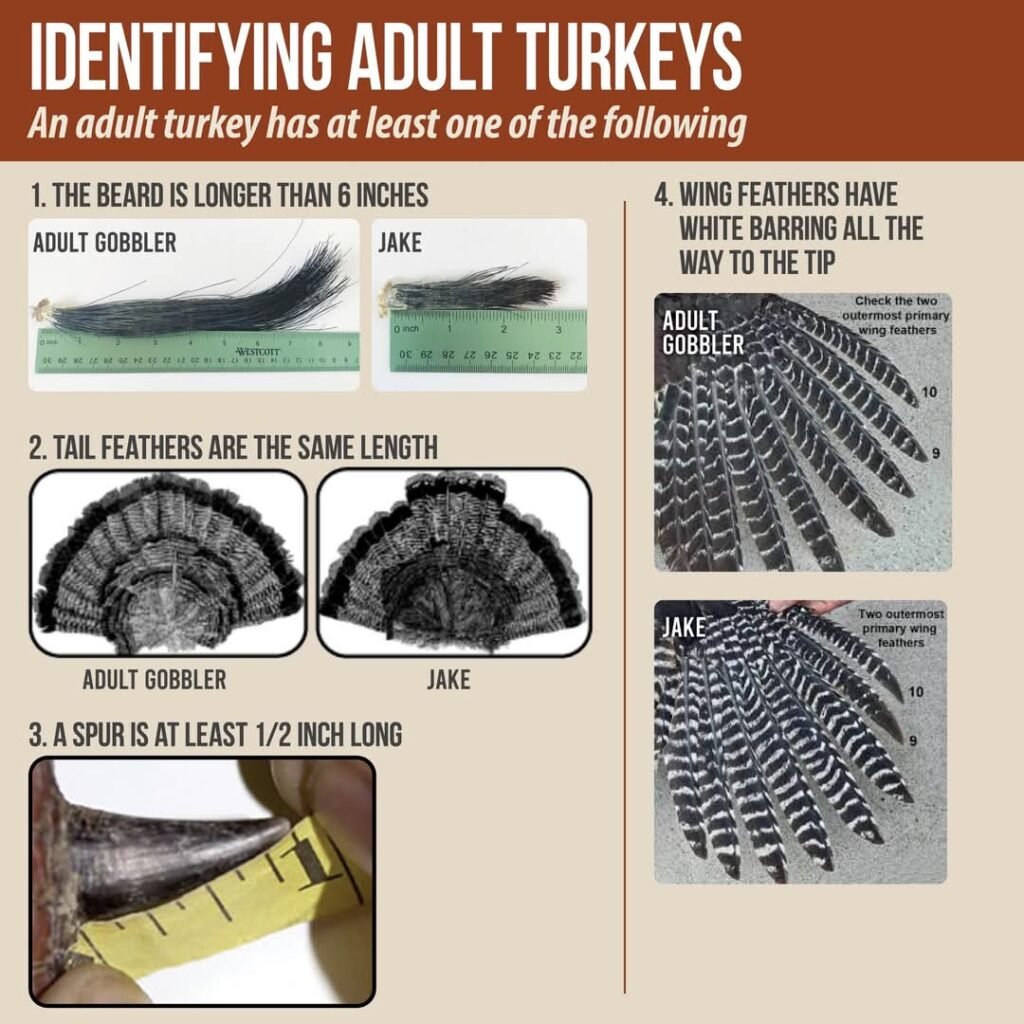
It is important to learn how to distinguish between adult toms and younger jakes, as well as knowing the difference between male and female turkeys. It sounds simple, but when you are out hunting, the differences may be less noticeable, especially from a distance.
Adult male turkeys are typically larger in size and more colorful than their female counterparts, with colors of red, white and blue being noticeable on their head and neck. A male turkey’s feathers also will be closer to black and have a more vibrant sheen, while a hen turkey will generally be more brown in appearance. Do not assume a bird is a male if it has a beard – about 10 percent of hens also can have beards.
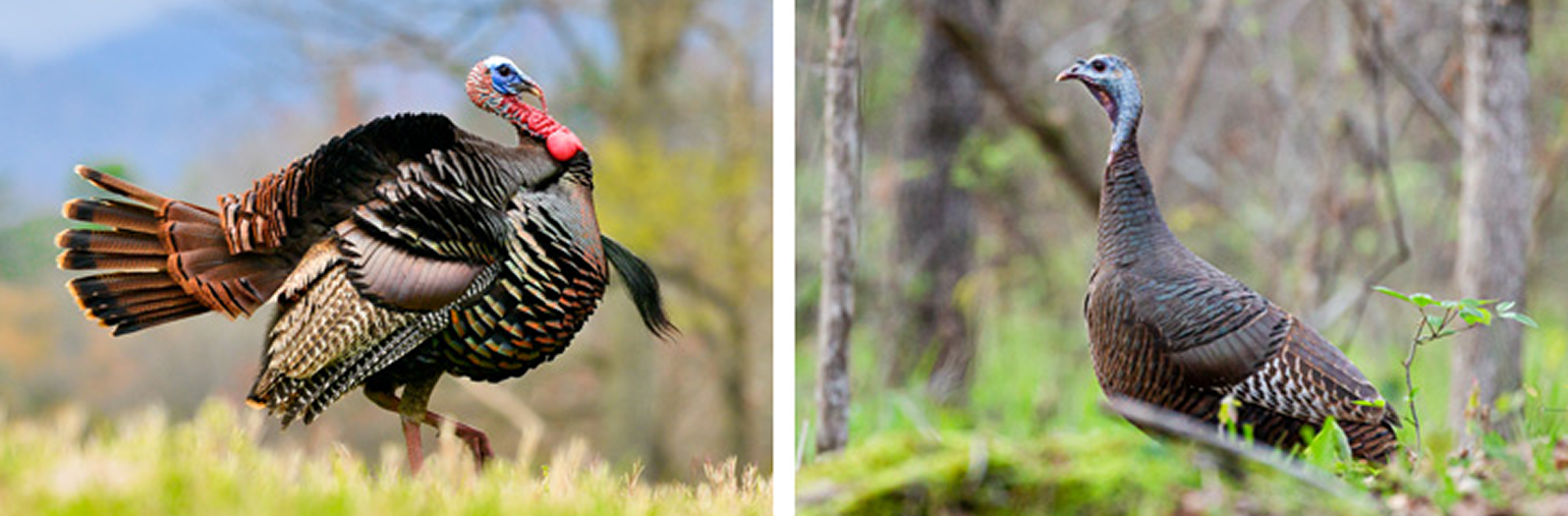
A good time to practice wild turkey identification is while scouting before the season begins. Take along binoculars, and take the time to make positive identifications.
Get a more in-depth information by reading our article on wild turkey appearances
Sounds
Wild turkeys have a complex vocabulary with as many as 30 different sounds, though far fewer are utilized by hunters. More common turkey vocalizations include:
Gobble
The gobble is a loud, rapid gurgling sound made by male turkeys. The gobble is one of the principal vocalizations of the male wild turkey and is used primarily during the spring (mating season) to let hens know he is in the area. Hunters must be cautious using a gobble, on public or private land, as it may attract fellow hunters to your position. It can also be a double-edged sword. A gobble may draw a dominate tom to you looking for a fight or you might drive away less dominant birds that want to avoid a beating. It is often used as a call of last resort. However, it can also be used effectively late in the evening when trying to get a tom to gobble on the roost.
Read the Science of Gobbling article.
Cluck
The cluck consists of one or more short, staccato notes. The plain cluck often includes two or three single note clucks. It’s generally used by one bird to get the attention of another. It’s a good call to reassure an approaching gobbler that a hen is waiting for him. This is a great call while trying to encourage a gobbler to come into range if he starts to hang up. It can also be used while birds are still on the roost to subtly let a gobbler know you are there.
Plain Yelp
The plain yelp of a hen is a basic turkey sound and is often delivered in a series of single note vocalizations. The plain yelp can have different meanings depending on how the hen uses it, but it is basic turkey communication. It is also commonly used by a hen to communicate with a gobbler during mating season. This is a basic turkey hunting call. If you can yelp, you have a chance calling in a turkey.
While all adult male turkeys gobble, and all hens cluck and yelp, each turkey truly has a voice of its own. Each cluck, purr or cut has different inflections particular to each bird.
Listen to and learn sounds of the wild turkey. You will surely up your outdoor skills if you can properly identify wild turkey calls in the field and mimic them on your next hunt.
Habitat
In the 1940s, Eastern and Osceola turkey populations remained only in remote areas of extensive timberland. These areas supported turkeys because topography made them inaccessible and kept legal and illegal hunting to a minimum. Inaccessibility also made logging and agriculture difficult, so these areas remained forested. As a result, biologists began to associate the wild turkey with big timber, but that wasn’t exactly accurate.
Once timbered areas were re-populated with wild turkeys (thanks to trap-and-transfer programs), wildlife managers began experimenting with turkey transplants in other areas. Turkey populations blossomed throughout the United States, and with up-to-date research, biologists and conservation managers have identified a few very important ecosystems that provide optimal habitat for the wild turkey. These habitats include rivers and streams (riparian zones), oaks and grasslands, pine savannas and wildlife openings (often called, forest clearings, meadows, pastures).
Learn more about the 4 Great Wild Turkey Habitats.
General wild turkey habitat requirements
- Trees: provide food, daytime resting and escape cover, and most importantly, nighttime roost sites
- Grasses: provide food for adults and are especially important to poults, which need an environment where they can forage for insects.
- Moisture: a direct and indirect key feature to wild turkey survival and reproduction
From sounds to identification of species, there is a lot to learn about wild turkeys. Check out the following articles for additional information about wild turkey behavior, habitat needs and lifecycle.
Why the Strut?
Life and Times of a Turkey Nest
Wild Turkey Lifestyle and Breeding
Wild Turkey Population Threats
Five Senses of the Wild Turkey
Eastern
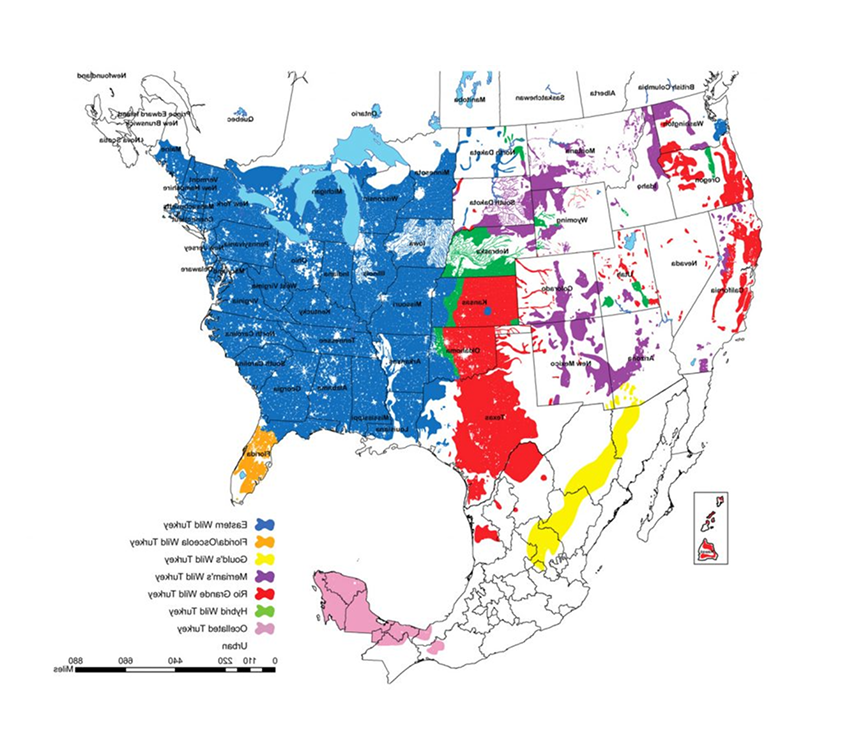
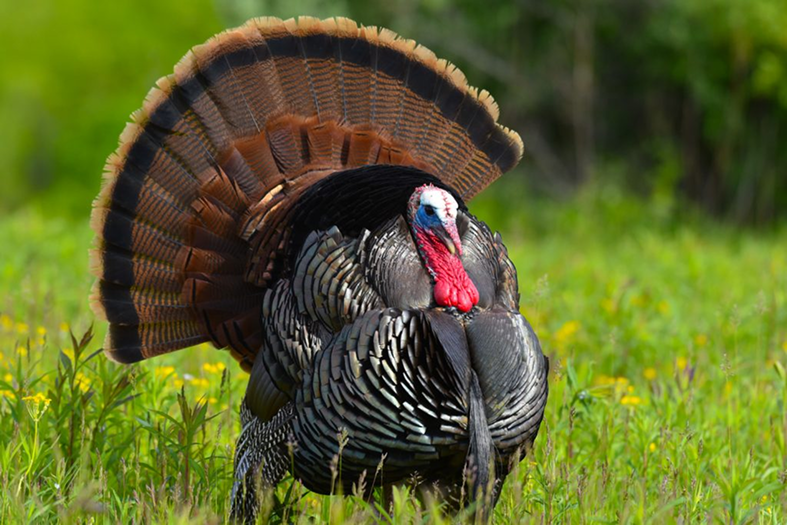
Easterns are the most widely distributed subspecies east of the Mississippi River. They are also the most abundant. They can be found in 38 states and numerous Canadian provinces. They are characterized by chestnut-brown tips on their tail feathers and white and black bars on their wings. Adult males or toms weigh 18-30 pounds while females or hens typically weigh in around 8 to 12 pounds. Eastern toms have what is considered the strongest gobbles of all subspecies. They also tend to have the longest beards of all the subspecies.
Florida or Osceola
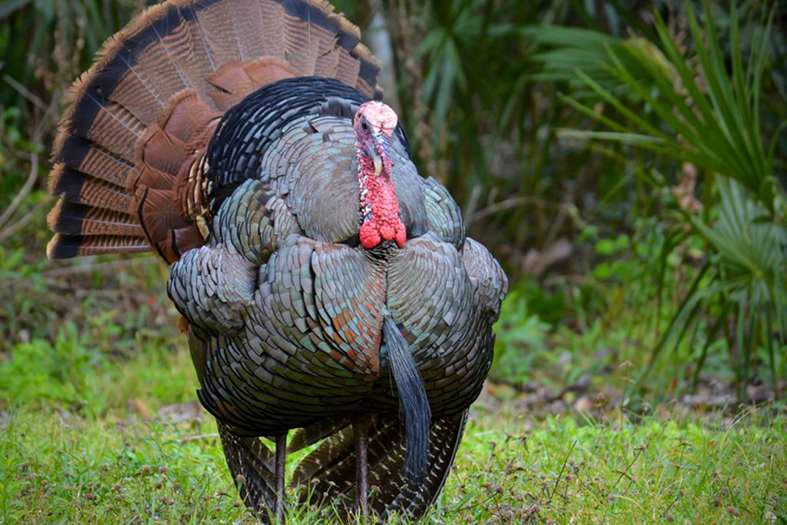
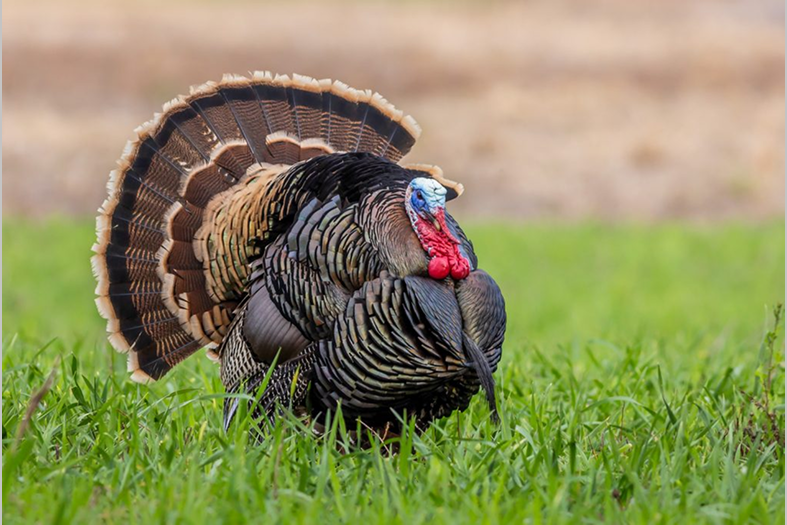
Rio Grande
Rios concentrate in the western desert regions of Texas, Oklahoma, Kansas and other western states. Mexico also has a healthy population. They are characterized by tan-colored tips on their tail feathers, equal black and white barring on wing feathers and moderate gobbles and beards. Adult males weigh around 20 pounds while their female counterparts weigh around 8 to 12 pounds.
Photo Credit: Darcy Daniels
Merriam’s
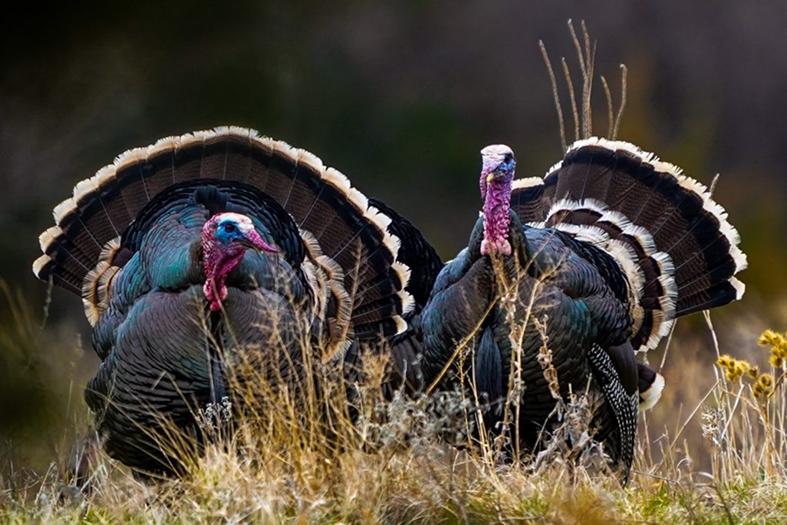
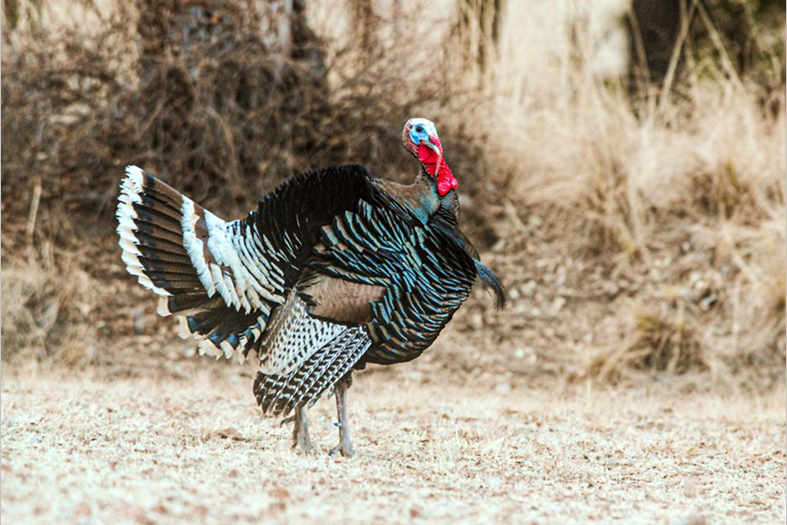
Gould’s
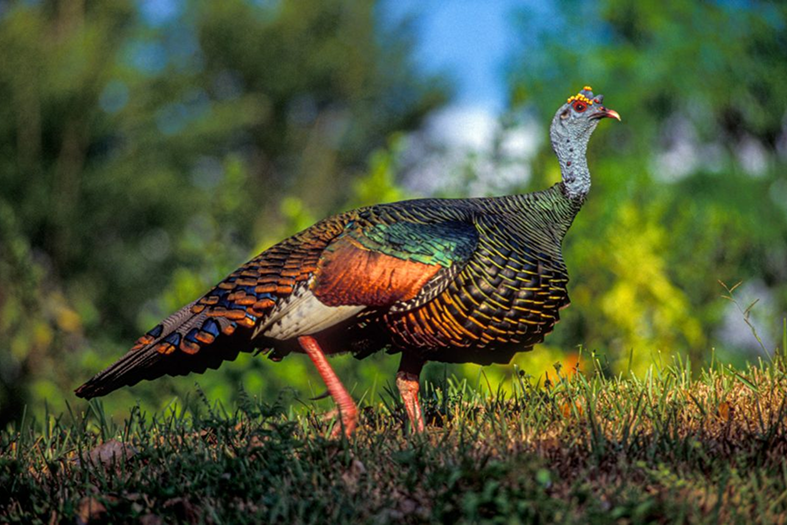
Ocellated
Appearance
There are two wild turkey species, the Ocellated turkey of Central America and the North American wild turkey. The five subspecies of the American wild turkey are Eastern, Merriam’s, Gould’s, Rio Grande and Osceola.
Hunting Seasons (and other regulations)
Doing some research on your state’s department of natural resources’ website can literally put the law in your hands. Knowing the laws concerning the species you will be hunting is extremely important. Can you shoot before sunrise? After sunset? How long after sunset can you shoot? These are questions that are best answered straight from the source. Just because uncle Bob said you can shoot up to an hour after sunset, does not make it the law. Know the laws before you hit the woods.
Each state declares its own seasons and bag limits for each game species. The state agency bases those decisions on science, harvest totals and much more. Whether small game or wild turkeys, be sure to know the season dates and bag limits.
Before their population declined, wild turkeys were typically hunted only in the fall. When the spring seasons were introduced, fall turkey hunting became less pursued. In recent years, as populations have climbed and then stabilized, many states reintroduced fall turkey seasons. Currently, more than 40 states have a fall season. Check your local regulations for season information or use our Spring and Fall Hunt Guides to get you started.
Depending a hunters age, hunter safety education may be required to buy hunting licenses. Apprentice licenses may be offered to first-time hunters in lieu of hunter safety education, but the new hunter must be accompanied by a properly licensed hunter before hitting the woods.
Find out what education you may need before you buy your license and go afield by visiting the International Hunter Education Association.
Camouflage (Camo)
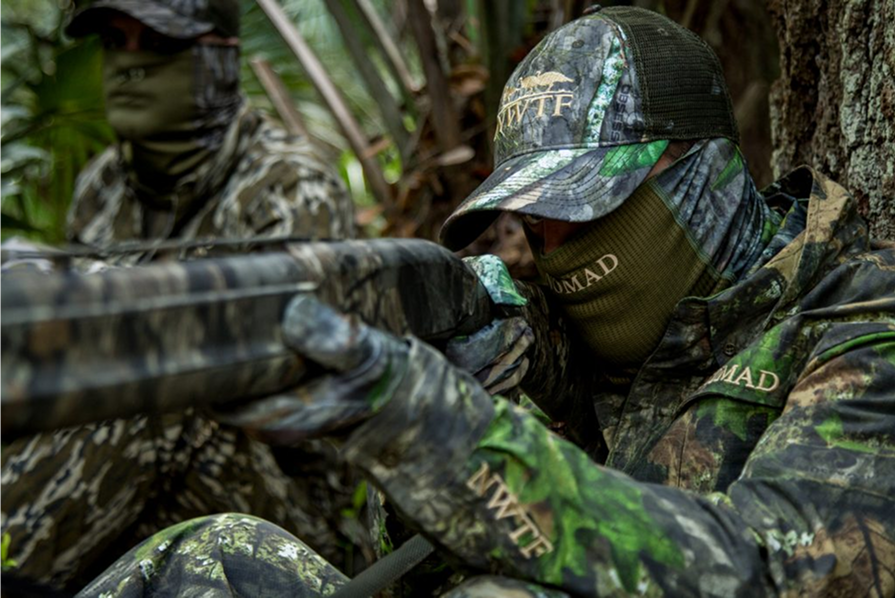

Gun or Bow
To hunt wild turkeys in most terrains, you will need basic gear. In most states, choices for method of take for turkeys are shotgun, muzzleloader or bow. Thanks to modern turkey loads and turkey chokes, both 12 and 20 gauge do a good job at taking down a turkey. With Federal Premium Ammunition’s TSS turkey loads, even .410 shotguns are viable turkey guns.
Many hunters choose to use a choke with their turkey guns to keep the pattern of the shot tight. Most choke tube companies have “turkey” choke tubes are designed for turkey hunting. Learn more about finding the right choke for your gun.
If you choose a bow, either traditional, compound or cross bow, make your choice something you are comfortable shooting from a seated position, as most turkey hunts happen from the ground.
Also to consider, hunting with a bow does present some logistical issues when hunting from a ground blind. Room is at a premium for drawing back your bow. Be sure to sit in the blind and practice drawing back your bow prior to your hunt. This will ensure you are not trying to draw too much weight on your bow as well. If you cannot comfortably sit and draw back your bow, you need to reduce your draw weight. Drawing too much weight can not only be awkward, but it can cause injury, create a safety issue and can put a damper on any hunt. Learn other beginner tips for bowhunting turkeys.
Calls
To be successful in turkey hunting, many hunters rely on calls to help bring the birds within shot range. Beginners usually find a box call the easiest to get a consistent sound. There are diaphragm or mouth calls, pot and striker calls made with glass or slate, box calls, wingbone calls and many others. Some take more practice than others. Start with one call.
It doesn’t have to be the most expensive box or pot call, just a good quality call will do the trick. Learn the basic sounds like cluck, purr, putt and yelp, to start. As your ability increases, you can add the more advanced sounds and learn to create dynamics within those sounds to keep the birds listening.
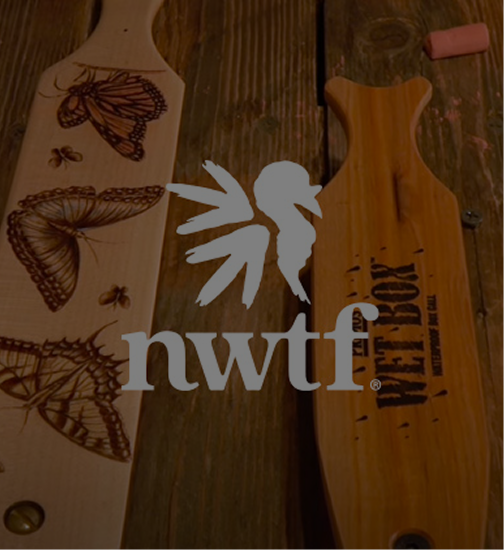
Box Call Basics
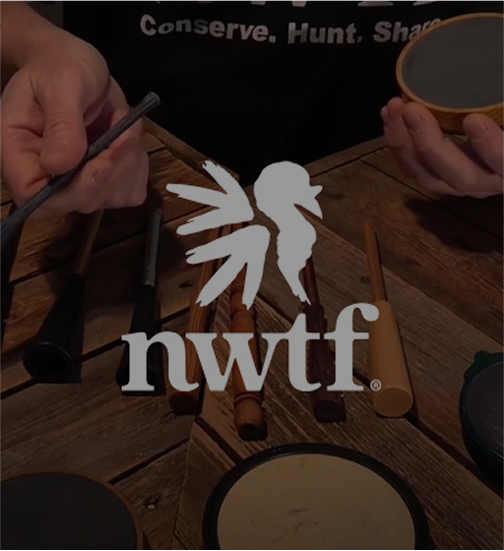
Pot Call Basics
Mouth Call Basics
Other Gear
As you become more familiar with the basics of hunting wild turkeys, there is certainly additional gear you may want to purchase. From high-end binoculars to mapping apps, the array of gear available is endless. One item that is common for hunters to pack is a first aid kit. Hopefully the need for one never arises, but it doesn’t hurt to be prepared.
There are also what some hunters consider “necessities.” A quality knife and a Thermacell are two that top the list, especially down in the South where the mosquitoes never really disappear. A war with mosquitoes or other biting insects is certainly not going to help you sit still while waiting on those gobblers. While a knife is great for a lot of tasks in the woods, notching a turkey tag is a great reason to have one nearby.
There is plenty of additional gear turkey hunters like to take into the woods with them.
If you find you are lugging a bunch of gear to the woods, you may be ready for a turkey vest or backpack. Each comes with a unique set of pockets and compartments and some can be lifesavers while out on the hunt as they incorporate cushioned seats into their designs. There are many vests designed for turkey hunters including the ones our partner NOMAD Outdoors has designed.
No matter what gear you decide on, it will need care and attention throughout the season to stay in top working order. After the season is done, your gear can use a little clean-up before being packed away. Read part 1 and part 2 of our guide to “After Season Gear Care.”
Prepare for the Hunt
Finding a Mentor
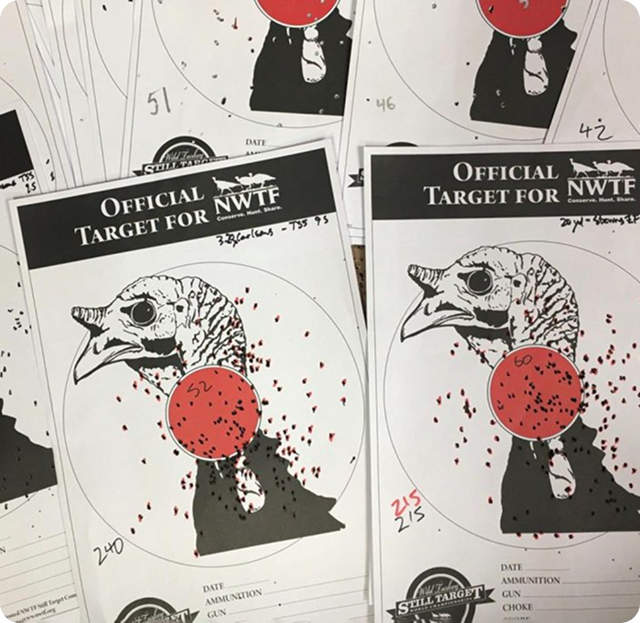
Patterning your Shotgun
Archery Range Time
Finding a Place to Hunt
There are most likely public land hunting opportunities nearby for those willing to get off the beaten path. Mobile and computer applications such as onX Hunt and HuntStand, provide users public land options, but checking with state agencies also is recommended to ensure public boundaries are correct and that you are following all applicable hunting regulations for that area.
Finding a place to hunt also could include asking a landowner for permission or joining/starting a hunting lease. No matter where you hunt, hunters should always show respect for the land, striving to keep it in pristine condition for generations to come.
On the Hunt
Checklist for safety:
- Always keep your gun’s muzzle pointed in a safe direction, never toward a person.
- Treat every gun as if it is loaded.
- Only load or cock a gun when you are shooting.
- Identify your target and verify beyond your target before shooting.
- Anyone shooting or near a shooter should wear shooting glasses and ear protection.
- Never climb or jump with a gun. You can’t control the direction of the muzzle if you stumble or fall. Unload and safely lay the gun down or hand it to a companion if you must climb or jump. Use the same procedure when crossing over or under fences, trees or other obstructions.
- Avoid ricochet. Never shoot at a flat, hard surface or at water. Ammunition can ricochet off water just like a skipped rock.
- Keep the muzzle clear. Never let anything obstruct the muzzle of a gun or allow it to come in contact with the ground.
- When you finish shooting, put the trigger safety in the “on” position and unload the gun. Store guns so they are inaccessible to untrained shooters.
Outreach
As mentioned in preparation for the hunt, one of the best ways to learn to hunt is by absorbing what you can from a mentor or other experienced hunters. Those hunters, many of whom have decades of experience, have a wealth of knowledge to pass along, so pay attention to what they say and do in the woods. If you do not know an experienced hunter, some advice from a novice might help quell the fears of hunting for the first time.
Here are a few additional resources:
- Advice to new hunters
- 8 things a new hunter needs to know
- Solo guide to hunting
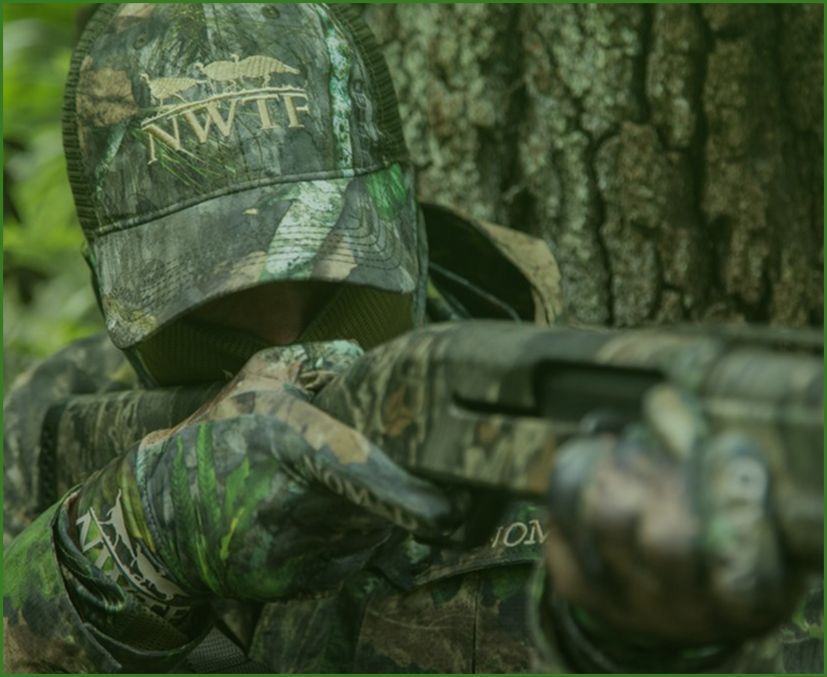
With safety covered, it’s time to head to the woods. If you are not hunting from a ground blind, find a substantial tree to lean against during your hunt. Watching for vines, briars and the like, finding the perfect tree becomes second nature after a few hunts.
Once you set out on your hunt, keep a close watch on your surroundings, as turkeys often leave subtle clues amongst the towering pines or sturdy hardwoods.
When settled in your blind or next to a sturdy tree, relax and get comfortable. If you are on a morning hunt, chances are it is still dark. Watching the world come alive as day breaks is one of the best parts of hunting. After the fly down, call to those birds that may be within hearing range. Start soft and slow with your calls. When you get an answer, you are in business. There are many scenarios that play out even after you get that answer.
After the Hunt
Telling your story
In sharing photos and your story, it is good to remember that less than 10 percent of the population is made up of hunters. Ensuring you convey respect for your animal is a must. Make sure to share all aspects of the hunt, from early season preparation, all the way to the harvest. If sharing a photo of you and your turkey, take a moment to present the animal in the best possible light, cleaning up unnecessary blood and straightening any ruffled feathers. Also take a minute to carefully choose your words before posting your story to social social. You may only get one chance to make a good impression with a nonhunter. For more tips on how to best present your story, check out these social media guidelines.
Field to Table
Extras
If you want to expand your knowledge, or watch experienced hunters give those birds a run for their money, check out the NWTF Streaming TV Shows.
Memberships:
Joining the NWTF in Indiana is a direct way to bolster the wild turkey populations and preserve the hunting heritage right in your backyard. Your membership supports crucial habitat restoration and forest management projects across Indiana’s state forests and public lands, ensuring healthy ecosystems for turkeys and a multitude of other wildlife. Beyond conservation, you’ll connect with a passionate community through local chapter events, including banquets and youth programs, all while championing the future of hunting and outdoor recreation for all Hoosiers.